
Swadesh Darshan 2.0: India's New Tourist Circuits 2026
Discover Swadesh Darshan 2.0 and India's new tourist circuits for 2026 — coastal routes, Buddhist trails, and more. Plan your trip with Lumiere Holidays.
Introduction
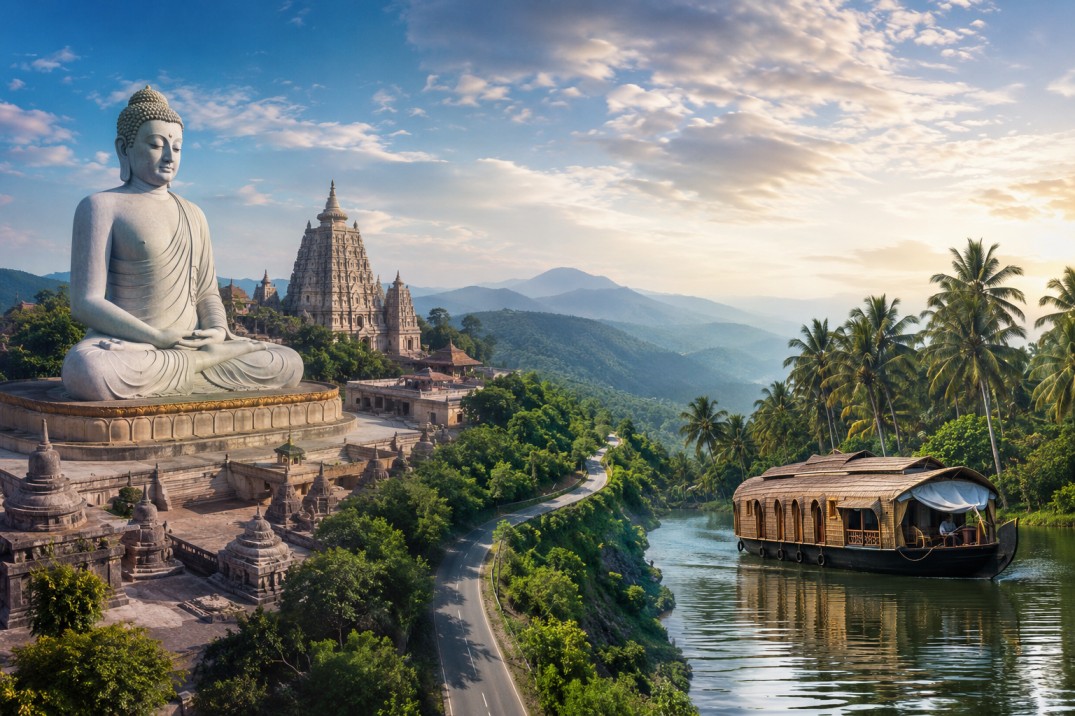
Picture a quiet stretch of Kerala backwater being transformed into a connected coastal trail, or a forgotten Buddhist monastery suddenly linked to an international tourist map. This is exactly what's happening under Swadesh Darshan 2.0, the Indian government's revamped tourism infrastructure scheme that is reshaping how travellers explore the country in 2026. Unlike its predecessor, which focused on standalone destinations, Swadesh Darshan 2.0 builds integrated, theme-based circuits ; connecting multiple towns, heritage sites, and natural attractions under a single, well-planned travel route.
This article covers what Swadesh Darshan 2.0 actually is, which new tourist circuits are opening up across India in 2026, how they compare to older travel routes, and how you can build a realistic itinerary around them ; whether you're drawn to coastal tourism circuits, the Buddhist circuit in India, or lesser-known regional trails.
Quick Answer Summary
Swadesh Darshan 2.0 is a Government of India scheme launched to develop sustainable, theme-based tourist circuits across the country by upgrading infrastructure, signage, homestays, and last-mile connectivity. As of 2026, it covers coastal tourism circuits, the Buddhist circuit, heritage circuits, and wildlife circuits, with several phases already operational in states including Kerala, Odisha, Bihar, and Sikkim. Travellers benefit from better roads, certified guides, and curated multi-day itineraries that didn't exist five years ago.
Key Takeaways
- Swadesh Darshan 2.0 is a refreshed version of India's 2014 tourism circuit scheme, now focused on sustainability, private-sector partnership, and digital integration.
- New tourist destinations in India for 2026 under this scheme include parts of the Bihar Buddhist circuit, Odisha's coastal belt, and Kerala's backwater-to-hill connector routes.
- Coastal tourism circuits India-wide now link smaller fishing towns and lesser-visited beaches to major hubs, easing pressure on overcrowded spots like Goa.
- The Buddhist circuit in India connects Bodh Gaya, Rajgir, Nalanda, Vaishali, and Kushinagar with improved rail and road access as of 2025–2026.
- Average circuit development cost per project ranges between ₹50–100 crore, according to Ministry of Tourism disclosures from recent budget sessions.
- Booking through an experienced operator matters more under this scheme, since many circuits are new enough that on-ground logistics (permits, local guides, homestay quality) still vary significantly by region.
Season-by-Season Breakdown for Visiting New Circuits
Season | Months | Best Suited Circuits | Notes |
Winter | November–February | Buddhist circuit (Bihar, UP), Coastal circuits (Odisha, Kerala) | Cooler daytime temperatures, ideal for walking tours |
Summer | March–June | Hill and heritage circuits (Sikkim, Himachal) | Coastal plains get hot; average 35°C+ in central India by May |
Monsoon | July–September | Western Ghats heritage trails | Lush scenery but check road access in hilly circuit zones |
Post-Monsoon | October | Most circuits reopen | Good visibility, fewer crowds, infrastructure freshly maintained post-monsoon repairs |
Itinerary Recommendation: A 10-Day Multi-Circuit Sample
For travellers who want a taste of both heritage and coastal experiences under Swadesh Darshan 2.0, here's a practical route:
- Day 1–3: Bodh Gaya and Rajgir (Buddhist Circuit) ; Visit the Mahabodhi Temple, Nalanda ruins, and the newly upgraded Rajgir ropeway access point.
- Day 4: Travel to Puri via rail link ; One of the improved connectivity corridors under Swadesh Darshan 2.0.
- Day 5–7: Odisha Coastal Circuit ; Puri, Konark Sun Temple, and Chilika Lake, now linked by a continuous coastal drive with improved signage and rest stops.
- Day 8–10: Optional extension to Kerala's backwater circuit ; Alappuzha and Kumarakom, where homestay infrastructure has been upgraded under the scheme's rural tourism component.
This itinerary works well as a template; our travel experts at Lumiere Holidays can adjust the pace, add Kerala-specific extensions, or swap in a wildlife circuit depending on your interests.
Comparison Table: Swadesh Darshan 1.0 vs Swadesh Darshan 2.0
Feature | Swadesh Darshan 1.0 (2014–2022) | Swadesh Darshan 2.0 (2023–present) |
Focus | Standalone destination development | Theme-based, multi-destination circuits |
Funding Model | Primarily government-funded | Public-private partnership emphasis |
Sustainability Criteria | Limited | Mandatory environmental and carrying-capacity assessments |
Digital Integration | Minimal | Circuit-level digital guides and booking integration |
Number of Circuits (approx.) | 76 projects sanctioned | 50+ circuits identified, phased rollout through 2026–2028 |
Expert Travel Tips
- Book accommodation in newly developed circuit towns at least 4–6 weeks ahead; supply hasn't caught up with rising interest yet.
- Carry cash for smaller towns along coastal and Buddhist circuits ; card acceptance is still patchy in many newly connected areas.
- Hire local guides certified under the scheme where available; they're trained specifically on the circuit's historical and ecological context.
- Cross-check road conditions during monsoon months even on "upgraded" routes, since maintenance schedules vary by state.
- If travelling with an agency, ask specifically how recently they've run trips on the circuit ; based on current tourism data, several circuits only became fully operational within the last 12–18 months.
Frequently Asked Questions
Q: What is Swadesh Darshan 2.0? A: Swadesh Darshan 2.0 is a Government of India tourism scheme that develops theme-based, multi-destination travel circuits with improved infrastructure, sustainability standards, and private-sector involvement. It replaces the project-by-project approach of the original 2014 scheme.
Q: Which are the new tourist circuits opening in India in 2026? A: Key circuits include the expanded Buddhist circuit across Bihar and Uttar Pradesh, coastal tourism circuits in Odisha and parts of Kerala, and heritage circuits in the Northeast, including Sikkim.
Q: How is the Buddhist circuit in India different now? A: The Buddhist circuit now connects Bodh Gaya, Rajgir, Nalanda, Vaishali, and Kushinagar with improved rail and road links, standardized signage, and better visitor facilities than under the earlier scheme.
Q: Are coastal tourism circuits in India safe and family-friendly? A: Yes, most coastal circuits developed under Swadesh Darshan 2.0 include upgraded safety infrastructure such as lifeguard posts and marked zones, though it's worth checking specific facilities for any given stretch before travelling with young children.
Q: Do I need a specialised tour operator to visit these circuits? A: It's not mandatory, but recommended for newer circuits. Many of the best tour operators in South India, including agencies based in Kerala, have already built itineraries around these routes and can navigate permit requirements or seasonal closures that independent travellers might miss.
Q: What's the best time of year to visit these new circuits? A: November through February works best for the Buddhist and coastal circuits, since daytime temperatures stay manageable; central Indian regions can cross 35°C by May, making summer travel less comfortable.
Q: Is Swadesh Darshan 2.0 only for domestic travellers? A: No ; while the scheme prioritises domestic tourism growth, several circuits, particularly the Buddhist circuit, are specifically designed to attract international visitors given their religious and historical significance to travellers from Southeast and East Asia.
Q: How much does a typical multi-circuit trip cost? A: Costs vary by circuit and travel style, but a 10-day trip covering one heritage and one coastal circuit, including mid-range accommodation and private transport, typically ranges from ₹35,000 to ₹60,000 per person.
Common Mistakes to Avoid
- Assuming all "upgraded" circuits have equal infrastructure ; development is phased, so some stretches are further along than others.
- Skipping local permit checks ; certain heritage and forest-adjacent circuit zones still require permits that aren't always flagged in general trip-planning blogs.
- Overpacking the itinerary ; newly connected circuits often have longer travel times between points than mature tourist routes, so build in buffer days.
- Booking with operators unfamiliar with the specific circuit ; ask directly about their on-ground experience with the route you're considering.
- Ignoring seasonal road conditions ; particularly for hill and Northeast circuits, where monsoon disruptions can still affect even recently upgraded roads.
Plan Your Swadesh Darshan 2.0 Journey with Lumiere Holidays
Swadesh Darshan 2.0 is opening up parts of India that were genuinely difficult to access just a few years ago, and getting the logistics right matters more on these newer routes. Our travel experts at Lumiere Holidays can build a custom Swadesh Darshan 2.0 itinerary around your dates and budget, drawing on direct experience with circuits across Kerala's backwater and hill routes, the Buddhist trail, and Odisha's coastal belt. If you're also exploring closer-to-home options, take a look at our Kerala honeymoon itinerary or our guide on Lakshadweep vs Maldives for island-style alternatives, our Anakulam jeep safari adventure for a wildlife-focused break, or get in touch directly to start planning your 2026 circuit trip.